
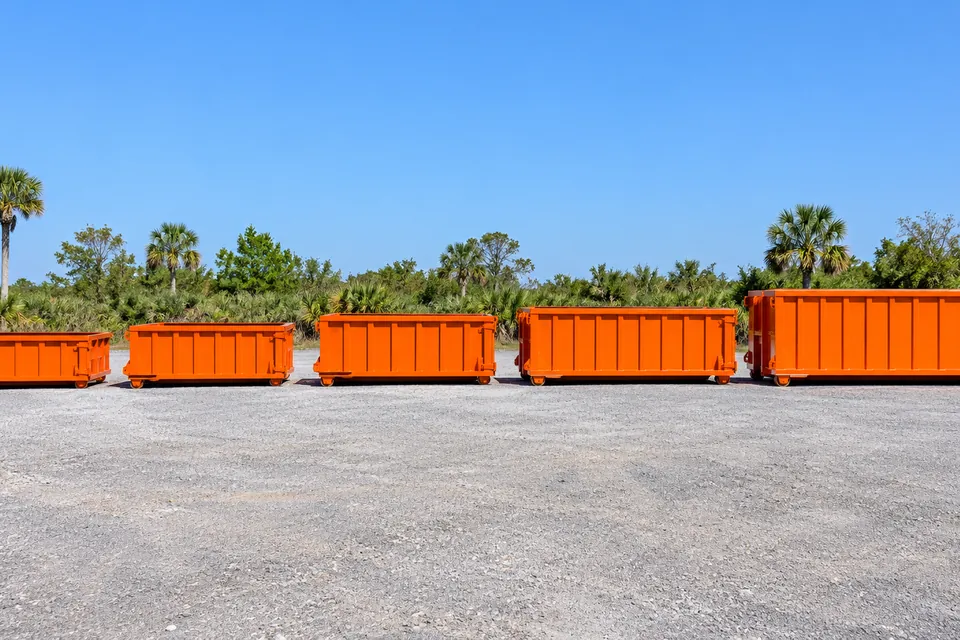
Dumpster size calculator
The calculator gives a starting point. If you are between two sizes, choose the larger one: stepping up costs less than a second haul.
How dumpster sizes are measured
Dumpster sizes are cubic yards of volume. One cubic yard is 3 × 3 × 3 feet, about the size of a washing machine. A full-size pickup bed holds roughly 3 cubic yards, so a 20 yard dumpster holds about 6 to 7 pickup loads.
Dumpster size by project
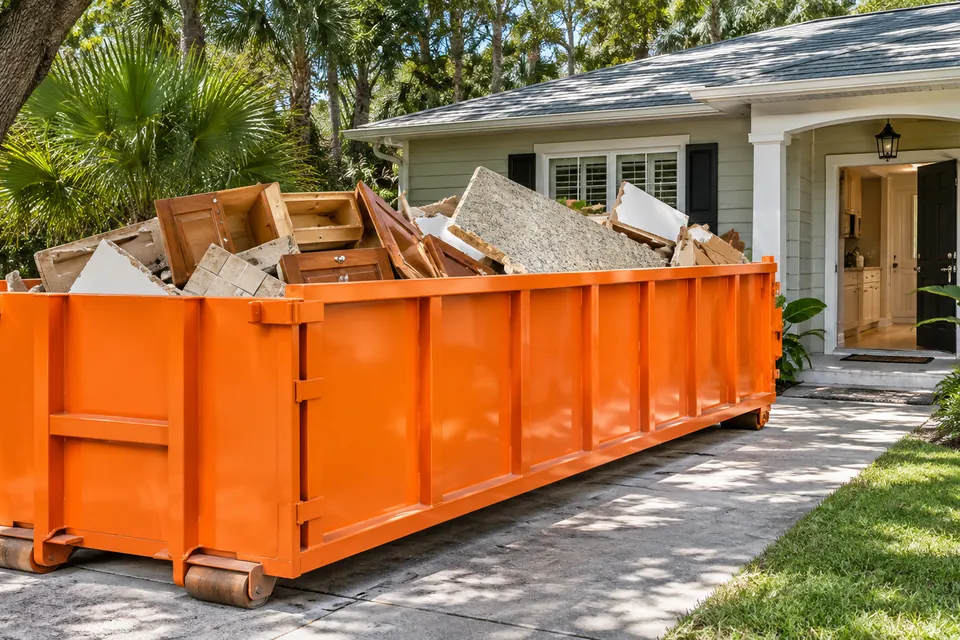
| Project | Small | Medium | Large |
|---|---|---|---|
| Bathroom remodel | 10 yd | 10 yd | 15 yd |
| Kitchen remodel | 15 yd | 20 yd | 30 yd |
| Roof tear-off | 15 yd | 20 yd | 30 yd |
| Garage or home cleanout | 15 yd | 20 yd | 30 yd |
| Estate or hoarding cleanout | 20 yd | 30 yd | 40 yd |
| Yard waste | 10 yd | 15 yd | 20 yd |
| Concrete, brick or dirt | 10 yd clean load, filled about half way | ||
| Construction or demolition | 20 yd | 30 yd | 40 yd |
Volume vs weight: the two limits
Every dumpster has a volume limit (the rim) and a weight limit (the included tons). Light, bulky debris such as furniture fills the volume first. Heavy debris such as shingles, tile and wet yard waste reaches the weight limit first. For heavy jobs, a smaller container is often the better buy. Our guide to dumpster weight limits lists how much common materials weigh.
Signs you need a bigger dumpster
- Your debris pile would cover a two-car garage floor more than knee-high.
- You are removing furniture, mattresses or cabinets from more than three rooms.
- The project will run longer than a week and keep producing debris.
Compare sizes side by side
See dimensions and weight allowances for every container on our roll-off dumpster sizes page, or read the 20 vs 30 yard dumpster comparison.
Frequently asked questions
What is the most common dumpster size for a house?
The 20 yard dumpster. It handles most remodels, roofs and cleanouts in a typical 3-bedroom home.
Is it better to get a bigger dumpster?
Usually yes. The price step from one size to the next is smaller than the cost of a second haul.